Why Gabion Retaining Walls Beat Concrete for South African Landscapes?
Strong, sustainable, and genuinely beautiful, gabion retaining walls are quickly becoming the preferred choice for South African homeowners, landscapers, and engineers who want their land to last through floods and all.
South Africa’s terrain does not play by the same rules as other places in the world.
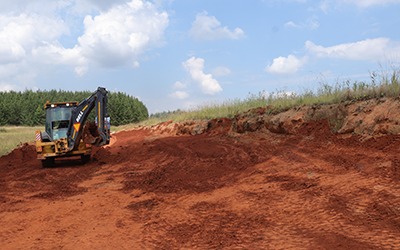
Our country has steep slopes, seasonal flooding, heavy clay soils, and dramatic temperature swings, all of which put enormous pressure on any retaining structure.
And yet, for decades, the default solution has been concrete, poured, cured, and left to crack under the strain of a landscape that refuses to stay still.
But these days, the use of gabion retaining walls in South Africa have begun to change the way people look at securing their land and their structures.
Practical, permeable, and rather elegant, gabion retaining walls in South Africa are earning their place on residential plots, game reserves, and civil engineering projects alike.
And this is why more South Africans are choosing stones over slabs.
What is the purpose of a gabion?
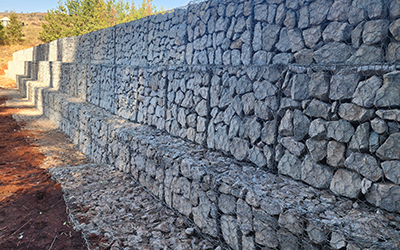
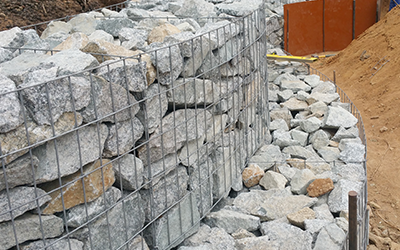
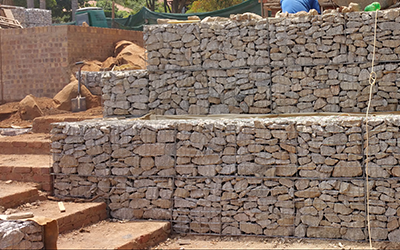
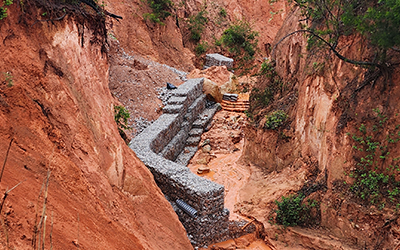
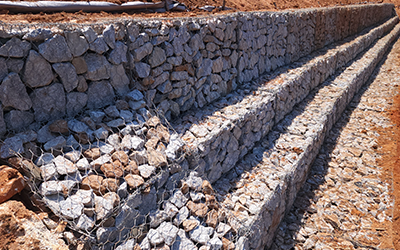
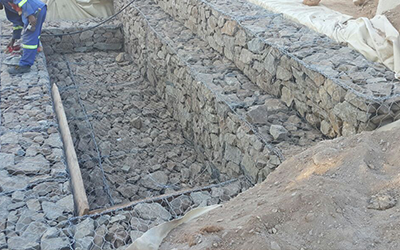
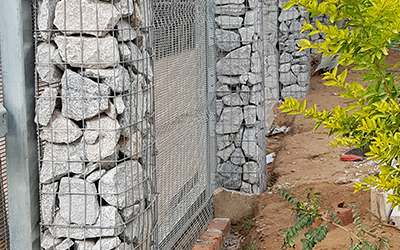
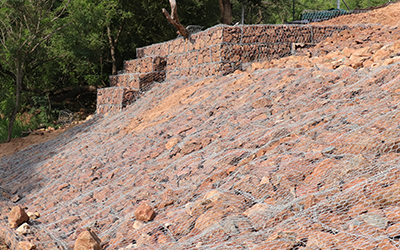
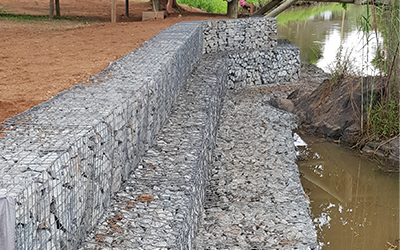
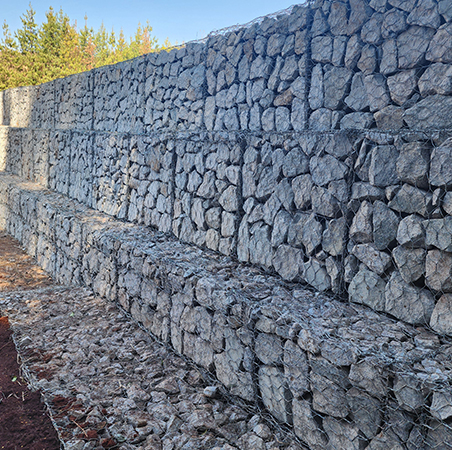
A gabion is essentially a wire mesh basket, filled with stones, and stacked or arranged to form a structure.
The word comes from the Italian gabbione, meaning “big cage”, and the concept, while ancient, has been refined into a highly engineered solution for modern landscapes.
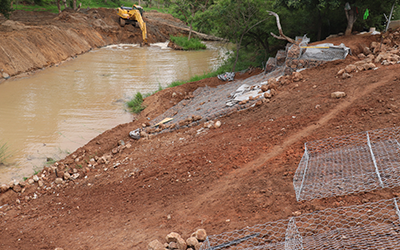
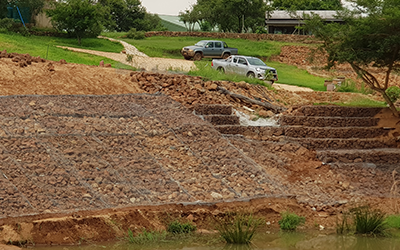
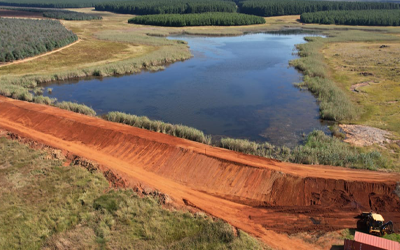
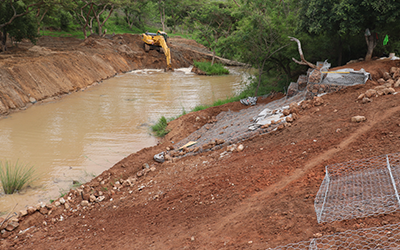
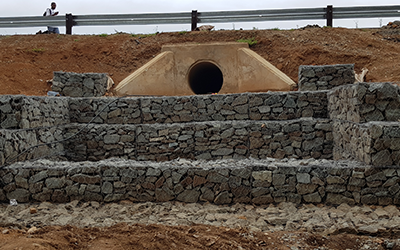
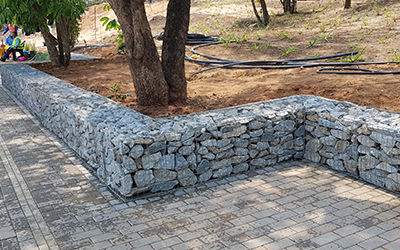
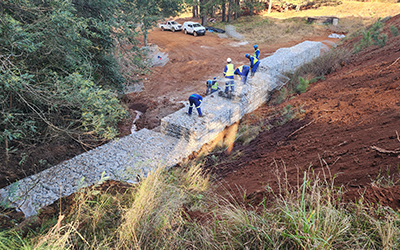
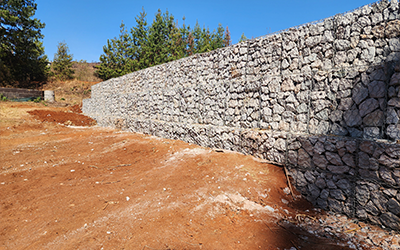
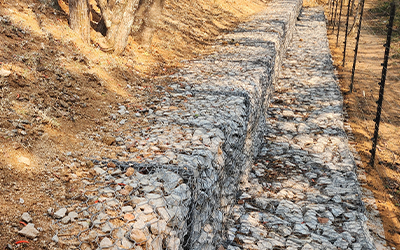
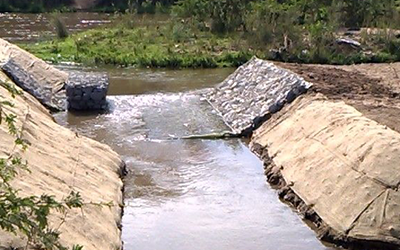
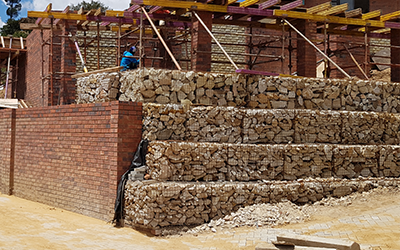
In South Africa, gabions are used for several interconnected purposes such as retaining soil on slopes and embankments to prevent erosion and slippage, protecting riverbanks, drainage channels, and wetland edges from water scouring, creating tiered garden terraces, feature walls, and architectural elements; stabilising road embankments and access routes on farms and game reserves, and managing stormwater runoff in areas prone to seasonal flooding.
Unlike solid walls, gabions work with the landscape.
Water passes through them freely, which means they do not trap hydrostatic pressure behind them, one of the leading causes of conventional wall failure.
The way that they are built allows them to flex slightly under load, which makes them remarkably resilient in the kind of shifting, expanding soils that South Africa is known for.
What is the disadvantage of gabions?
No structure is entirely without its complexities, and gabions are worth understanding fully before you commit to a design. Two points come up regularly in conversation.
The first is the wire mesh itself.
In coastal or highly corrosive environments, galvanised wire will more than likely show wear as the years pass. The good news is that this is entirely manageable as modern gabions use heavily galvanised or PVC-coated wire specifically engineered for longevity, and professional suppliers select mesh grades appropriate to each site’s conditions. When specified correctly, the wire outlasts the concern.
The second is the visual texture.
Gabions, by nature, have a natural and organic aesthetic of stacked stone rather than a smooth render finish. For most South African landscapes, particularly those with a fynbos, bushveld, or Highveld character, this look is an asset, rather than an unsightly drawback. For those wanting a sleeker finish, gabion walls can be faced with mortar or clad in stone veneer to achieve almost any aesthetic.
In short, the perceived disadvantages can be avoided when gabions are properly designed and specified for the specific project.
How long do gabion walls last?
When built correctly, gabion retaining walls have a service life of 50 to 100 years.
That figure comes from civil engineering studies and decades of real-world performance across erosion control and infrastructure projects globally.
In South Africa’s conditions, longevity comes down to three things: the quality of the wire mesh, the stone fill, and the installation.
Heavy-gauge, galvanised or PVC-coated mesh resists corrosion effectively.
Hard, angular stone fill, such as granite, dolerite, or quartzite, beds tightly and does not degrade over time. A properly engineered foundation and installation by experienced contractors ensures the structure performs as designed for generations.
Compare this to unreinforced concrete retaining walls, which are vulnerable to cracking, water ingress, and structural failure within 20 to 30 years in challenging South African conditions, and you’ll see that the mathematics of longevity clearly favour gabions.
Why are gabion retaining walls better than concrete?
If you are still weighing up your options, and if you are still having some doubts about gabions over concrete walls, this is why going with gabions is hands down your best option:

Permeability and drainage
Concrete is impermeable. Water tends to build up behind a concrete retaining wall, creating hydrostatic pressure that will, over time, crack and push the wall out of alignment.
Gabions, on the other hand, are inherently permeable. Water moves through the rock fill freely, eliminating drainage pressure entirely. In South Africa’s high-rainfall regions, this advantage is more of an engineering difference than anything aesthetic.
Flexibility and movement
Concrete is rigid, and South African soils, particularly the expansive clay soils found across Mpumalanga, Limpopo, and the KwaZulu-Natal hinterland, expand and contract with moisture changes.
A rigid concrete wall resists this movement and eventually fails because of it.
A gabion wall has inherent flexibility. It shifts and settles without cracking or compromising its structural integrity.
Cost and installation
Gabion construction typically costs less than comparable concrete retaining walls, particularly on larger projects.
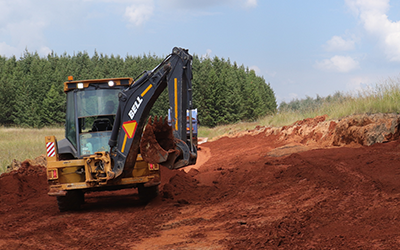
There is no formwork, no curing time, and no specialised plant required. The stone fill is often locally sourced, which reduces material costs and transport significantly. Installation can proceed in stages, and the work is not disrupted by weather in the way that concrete pours can be.
Environmental compatibility
Concrete is a significant producer of carbon dioxide in its manufacture, and it creates an impermeable barrier that disrupts natural water movement and plant root systems.
Gabion walls, by contrast, allow vegetation to grow freely through the gaps in the rock fill, they can become a habitat for small reptiles and insects, and they tend to integrate naturally into the surrounding landscape over time.
For South African properties, particularly those in ecologically sensitive or aesthetically valued settings, this matters greatly.
Aesthetics
A well-built gabion wall is genuinely beautiful.
The texture of natural stone, the way it weathers and softens over time, and the way it anchors a landscape rather than imposing upon it, are all qualities that are difficult to replicate with any other material.
Working with Specialists Makes all the Difference
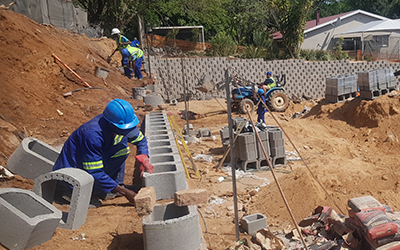
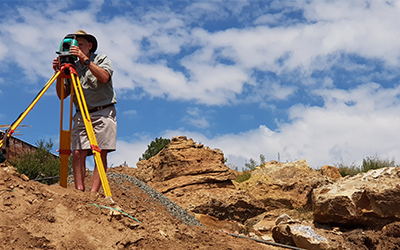
Gabion retaining walls in South Africa perform beautifully when they are designed properly. That means the right wire mesh specification for the site’s conditions, the correct stone fill for the load requirements, appropriate foundation design, and installation by a team that understands the terrain they are working with.
Civil and Eco Engineering has been delivering gabion solutions, civil engineering, and environmental structures across the Lowveld and Mpumalanga since 1999. Our team works with homeowners, architects, engineers, and land managers to design and build retaining walls that are structurally sound, ecologically responsible, and genuinely good-looking.
If there is a slope, embankment, or drainage challenge on a property that needs a lasting solution, contact our team for a site assessment and custom quote.
Frequently Asked Questions
Are gabion retaining walls suitable for residential gardens in South Africa?
Yes, absolutely. Gabion retaining walls are well suited to residential gardens across South Africa, from small urban terraced slopes to larger rural properties. They are cost-effective, durable, and can be designed in a wide range of heights and configurations to suit any garden layout. Their natural stone aesthetic also complements South African indigenous planting schemes particularly well.
How much do gabion retaining walls cost in South Africa compared to concrete?
Gabion retaining walls are generally more cost-effective than comparable concrete retaining walls, particularly on medium to large projects. Cost varies depending on wall height, length, stone fill type, and site accessibility, but the absence of formwork, curing time, and specialist concrete plant typically means lower installation costs. Locally sourced stone fill further reduces material costs on many South African sites.
Do gabion walls need maintenance in South Africa?
Gabion retaining walls require very little ongoing maintenance when built to specification. Inspections after major flooding or seismic activity are recommended, and any displaced stone fill should be replaced promptly. The wire mesh, when correctly specified with galvanised or PVC-coated wire, does not require treatment or painting. Over time, vegetation growing through the rock fill actually adds to the wall’s stability.
Can gabion walls be used on steep slopes in South Africa?
Yes. Gabion retaining walls are particularly effective on steep slopes, where their flexibility and drainage properties make them structurally superior to rigid concrete alternatives. On very steep or high-load sites, professional engineering design is essential to ensure the correct wall geometry, foundation specification, and anchoring system. Certified civil engineers with gabion experience should be engaged for any wall over one metre in height on a steep slope.
Which stone is best for filling gabion walls in South Africa?
Hard, angular stone is ideal for gabion fill, as it locks together and resists movement under load. In South Africa, granite, dolerite, quartzite, and hard sandstone are all commonly used and widely available. The stone should be sized to prevent it from passing through the mesh apertures — typically 100mm to 200mm for standard retaining applications. Rounded river stones are generally not recommended for structural applications, as they do not interlock as effectively as angular crushed stone.