
Reno Mattresses for Riverbank Protection: Stop Flood Damage Before It Starts
A metre of riverbank does not take long to disappear when the rain doesn’t stop falling.
The floods that swept through Mpumalanga and Limpopo in January 2026 caused an estimated four billion rand in damage, and farmland took the hardest hit.
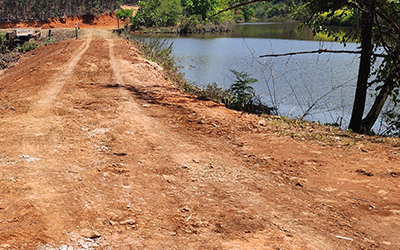
If you farm anywhere near a river, stream or irrigation canal, you already know what one bad flood season can do to a bank that looked perfectly solid the year before.
Reno mattresses are the unglamorous fix that engineers have trusted since the 1960s, and South African farmers are catching on fast, for good reason.
What Causes Riverbank Erosion?
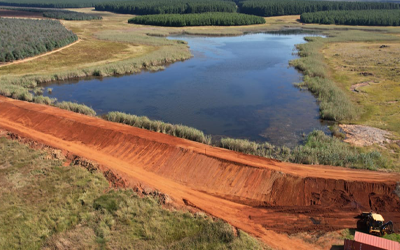
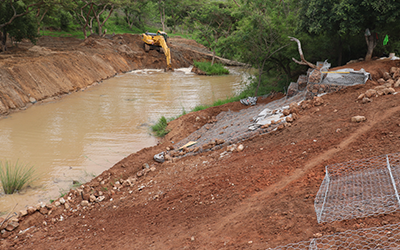
Erosion accelerates the moment water velocity outpaces the soil’s ability to hold itself together, and a single flood peak can strip more topsoil than an entire normal season of gentle flow.
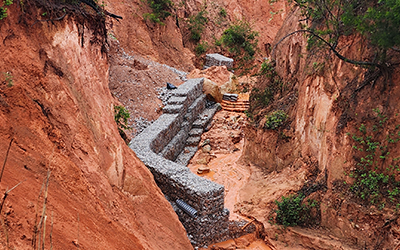
Once that first metre goes, the bank keeps retreating with every rise in the river, undermining whatever sits nearby whether it’s grazing land, fence lines, pump stations, irrigation intakes or access roads.
Left unmanaged, and this becomes a recurring repair bill that grows a little larger with every summer storm.
What is a reno mattress?
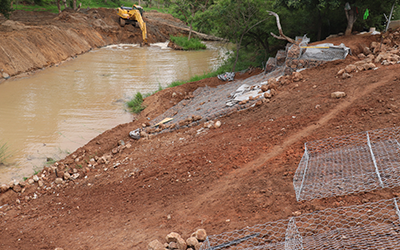
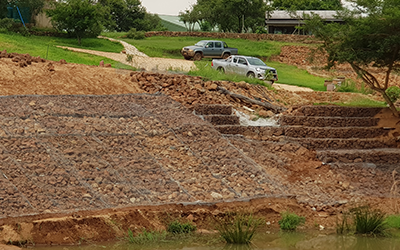
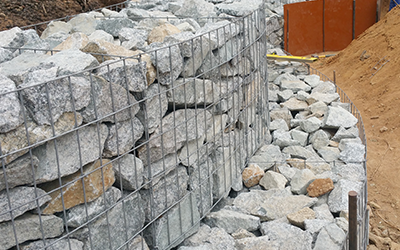
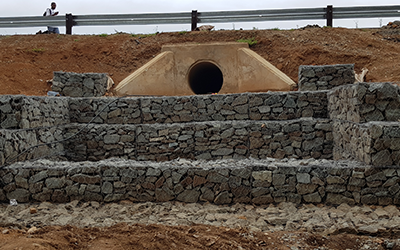
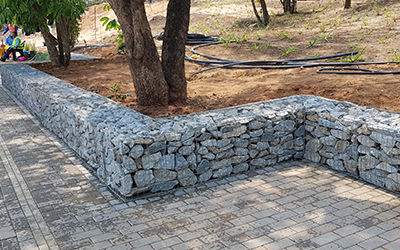
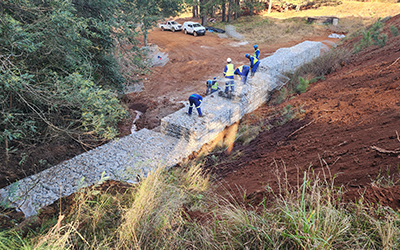
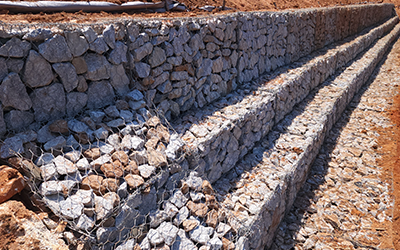
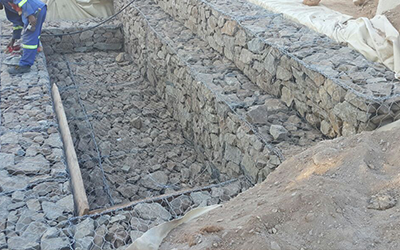
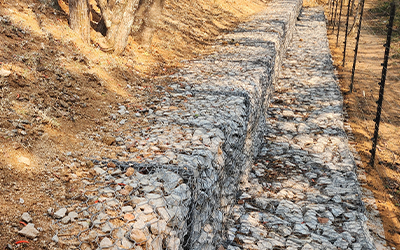
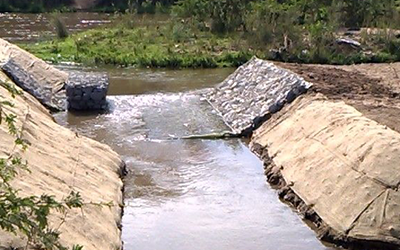
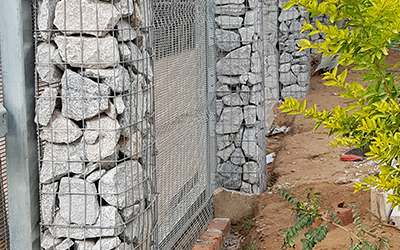
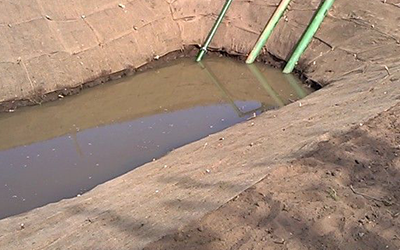
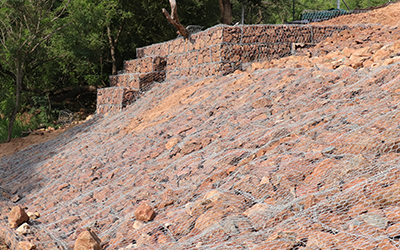
A reno mattress is a flat, low profile gabion structure, a shallow compartmentalised wire mesh basket positioned along the riverbank and filled with stone on site, typically between 170mm and 300mm thick.
We build ours from galvanised or PVC coated hexagonal woven mesh with an 80 x 100mm aperture, manufactured to the SANS 1580 standard that governs steel wire mesh quality in South Africa.
Because the structure is permeable, water seeps through the stone fill instead of building up pressure behind it, so no extra drainage is required.
The mesh also flexes and settles with the ground rather than cracking like rigid concrete, and silt gradually fills the gaps, letting grass and reeds root through until the structure blends into the farm rather than looking industrial.

Reno mattress versus rip rap
This is what a comparison between these two options looks like:
| Factor | Reno mattress | Loose rip rap |
|---|---|---|
| Stone required for equal protection | Engineering data shows up to 70% less | Higher volumes needed to resist the same flow |
| Performance in high velocity flow | Confined and stable | Prone to individual rocks washing loose |
| Settles with ground movement | Yes, flexible mesh structure | Limited, rocks can separate and scatter |
| Vegetation growth over time | Yes, blends into the landscape | Minimal |
| Typical maintenance | Low once established | Ongoing rock replacement after floods |
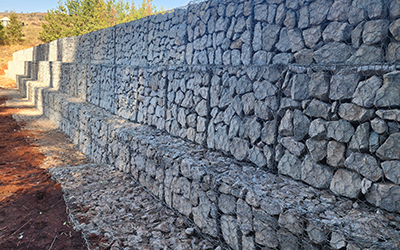
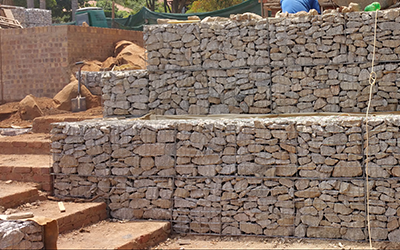
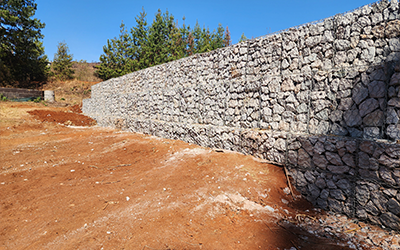
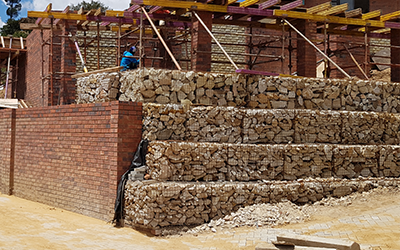
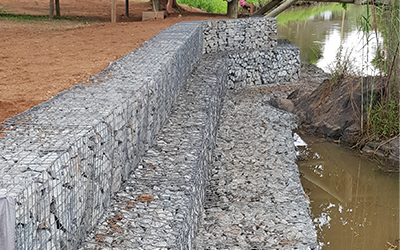
For a steep drop rather than a sloped bank, a stacked gabion basket wall does the retaining job a flat mattress cannot, so knowing which stretch of your riverbank is sloped and which is closer to vertical matters before you order either one.

Finding the Reno Mattress for Your Farm
Three details will decide the correct specification for any stretch of riverbank.
Wire coating will be your first big consideration.
Galvanised mesh suits most freshwater situations, while PVC coated mesh holds up better where water carries higher salinity, fertiliser runoff or livestock effluent.
Thickness is the second thing to think about.
A slow-moving floodplain edge suits a slimmer 170mm mattress, while a fast bend typically needs the fuller 300mm option to stay put.
Finally, you will need to confirm SANS 1580 compliance with your supplier, since this standard separates a mattress built to last decades from one that corrodes within a few wet seasons.
Riverbank protection is one of those farm jobs that needs to be done properly the first time.
A well specified reno mattress installation from Civil Structural and Eco Engineering costs a fraction of what a single flood season can take in lost land, fencing and access roads, and it keeps working for decades once it is in place.
Reno mattresses South Africa are what holds the land together when the river starts to rise.
Frequently Asked Questions
What is a reno mattress used for?
A reno mattress is a flat, stone filled wire mesh structure used to protect riverbanks, canal linings, spillways and culvert areas from erosion. It resists high water flow while allowing water to pass through rather than building up pressure behind it.
How thick should a reno mattress be for riverbank protection?
Reno mattresses typically range from 170mm to 300mm thick. Slower moving floodplain edges suit the thinner option, while fast flowing bends or high velocity sections of a river need the fuller 300mm thickness to remain stable.
Are reno mattresses better than rip rap for erosion control?
Reno mattresses generally outperform loose rip rap because the confined stone fill resists high velocity flow without individual rocks washing away. Engineering data shows reno mattress systems can need up to 70 percent less stone than rip rap for equal protection.
Do reno mattresses harm the natural look of a riverbank?
No. Silt fills the gaps between the stones over time, allowing grass and reeds to root through the mesh. Within a season or two, a properly installed reno mattress blends into the surrounding landscape rather than standing out.
How long do reno mattresses last?
A correctly specified reno mattress, manufactured to SANS 1580 with the right wire coating for local water conditions, commonly lasts several decades with minimal maintenance once vegetation has established through the structure.