ABR Wastewater Treatment: Off-Grid Solution for Eco-Lodges and Farms
Running a lodge or a farm in a remote part of South Africa means having to solve problems that most people in cities never think about.
Water supply. Power. Crazy weather. And, with increasing regulatory pressure and a growing guest base that actually cares about environmental impact, the way wastewater is handled.
For property owners who have been managing wastewater with workarounds and wondering whether there is a better option, there is.
For decades, the default answer was a septic tank, or in more challenging situations, nothing particularly sophisticated at all. That picture is changing. And the Anaerobic Baffled Reactor, or ABR, is one of the main reasons why.
ABR wastewater treatment in South Africa is gaining traction across the lodge, eco-tourism, and agricultural sectors because it works well, needs no electricity, produces very little sludge, and can be installed in locations that conventional treatment infrastructure simply cannot reach.
What an ABR Actually Is and How It Works?
The Anaerobic Baffled Reactor was developed in the early 1980s and has been studied extensively in South Africa, including research conducted at the University of KwaZulu-Natal and through funding from the South African Water Research Commission. It is, at its core, an evolved septic tank.
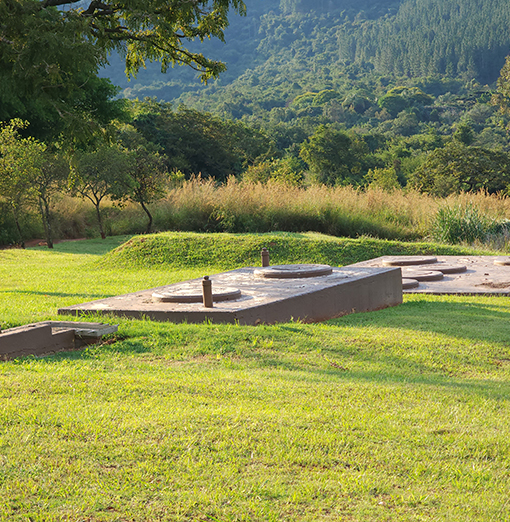
Where a conventional septic tank is essentially a single chamber that allows solids to settle and liquid to overflow, an ABR uses a series of internal baffles that force incoming wastewater to flow upward through multiple compartments, each containing an active layer of anaerobic biological sludge.
As the wastewater passes through these chambers, naturally occurring microorganisms break down organic matter without requiring any oxygen, power, or chemical addition.
The results are measurable.
BOD (biological oxygen demand) can be reduced by up to 90% in a well-functioning ABR, which is far superior to removal in a conventional septic tank.
Laboratory-scale studies have shown high treatment efficiencies of above 80% COD removal, with the compartmentalised design acting as a strong stabilising factor that evens out feed fluctuations across the reactor chambers.
For a lodge with variable guest occupancy or a farm with seasonal processing loads, that resilience to fluctuating input is a practical advantage that simpler systems cannot match.
Why It Suits the South African Off-Grid Lifestyle?
The characteristics that make an ABR well-suited to remote South African conditions are not incidental. They are structural.
No electricity is required for operation. No mechanical parts means no motor failures and no call-outs for repairs in areas where a technician may be two hours away. Sludge production is low, which means desludging intervals are longer and the cost and logistical challenge of removing waste from remote sites is reduced substantially.
South Africa’s Department of Water and Sanitation has increasingly flagged decentralised wastewater treatment as a priority for properties that sit outside municipal reticulation areas.
An ABR qualifies as a decentralised treatment system and, when correctly designed and installed, it can meet the effluent quality requirements for subsurface irrigation or constructed wetland polishing.
For a lodge that wants to close the water loop and use treated greywater for garden irrigation, the ABR is the first step in a system that makes that possible.
South Africa’s Green Star rating system for buildings and developments recognises responsible wastewater management as a contributing factor to certification. For eco-lodges and responsible tourism properties pursuing any form of sustainability accreditation, including Fair Trade Tourism or the Tourism Grading Council’s environmental criteria, documented and compliant wastewater treatment is no longer optional.
The Difference Between an ABR and a Conventional Septic Tank
The comparison is worth making clearly because it comes up in almost every initial conversation about wastewater options for off-grid properties.
A septic tank provides primary treatment only. Solids settle, liquid passes through, and the effluent that leaves the tank still carries a significant organic and pathogen load. It requires a well-designed absorption field to function properly, and in areas with clay soils, high water tables, or limited land, that absorption field becomes a problem quickly.
An ABR provides substantially better treatment within a comparable or smaller footprint. The baffled design ensures high solids retention, resulting in high treatment rates, while overall sludge production remains characteristically low. The effluent quality from a properly functioning ABR is suitable for secondary treatment stages such as a constructed wetland or a subsurface drip irrigation system, which a conventional septic tank effluent often is not without significant polishing.
What to Consider Before Installation?
Sizing is the most important design variable.
An ABR must be sized for the hydraulic load it will receive, which means calculating peak daily water usage across all sources, including guest accommodation, kitchen, and laundry.
Undersizing leads to reduced treatment efficiency; oversizing is wasteful of materials and cost.
A competent designer will also account for the soil conditions at the discharge point, the distance from water sources, and any applicable provincial or municipal bylaws that govern effluent disposal on agricultural or tourism-zoned land.
Pretreatment of kitchen wastewater, particularly grease and food solids, is strongly recommended before it enters the ABR, as fats, oils, and grease can impair the biological sludge layer if they accumulate in volume. A simple grease trap ahead of the inlet addresses this effectively.
Get a Quote
Civil and Eco Engineering designs and installs ABR wastewater treatment systems for lodges, farms, and off-grid properties across South Africa. For property owners at the planning stage or those replacing ageing septic infrastructure, the design conversation is the most valuable first step.
Frequently Asked Questions
What is ABR wastewater treatment, and how does it work in South Africa?
An Anaerobic Baffled Reactor (ABR) is a decentralised wastewater treatment system that uses a series of internal baffled chambers to force wastewater upward through layers of active biological sludge. Naturally occurring anaerobic microorganisms break down organic matter in each chamber without the need for electricity, chemicals, or mechanical components. The system can reduce biological oxygen demand by up to 90% and is recognised by the South African Water Research Commission as an appropriate technology for on-site sanitation and wastewater treatment. In South Africa, ABRs are particularly well-suited to eco-lodges, game farms, and agricultural properties that sit outside municipal wastewater infrastructure.
Is an ABR better than a septic tank for a lodge or farm in South Africa?
In most cases, yes. A conventional septic tank provides only primary treatment, meaning the effluent that leaves the tank still carries a significant organic load and requires a well-functioning absorption field for safe disposal. An ABR provides substantially better treatment through its multi-chamber baffled design, producing cleaner effluent that is suitable for secondary polishing stages such as a constructed wetland or subsurface irrigation system. ABRs also produce less sludge over time, which reduces the cost and logistical challenge of desludging on remote properties. For lodges and farms with variable occupancy or seasonal processing demands, the ABR’s resilience to fluctuating loads is an additional practical advantage.
Does an ABR wastewater system require electricity or maintenance?
No electricity is required for an ABR to operate. The system functions entirely through gravity flow and anaerobic biological processes. There are no mechanical components, pumps, or motors in the core reactor unit, which significantly reduces maintenance requirements and the risk of operational failure on remote properties. Routine maintenance involves periodic inspection, monitoring of inlet and outlet conditions, and desludging at intervals that vary depending on the load and size of the system but are typically far less frequent than a conventional septic tank. A grease trap ahead of the inlet should be cleaned regularly to protect the biological sludge layer in the reactor.
Can ABR effluent be used for irrigation on a farm or lodge in South Africa?
ABR effluent can be used for subsurface irrigation when the system has been correctly designed and is operating within its intended parameters. In most cases, the effluent from an ABR is directed to a secondary treatment stage, such as a constructed wetland or a soil filter, before being used for irrigation. This polished effluent can then be applied to non-food-contact crops or garden areas via subsurface drip systems. The exact requirements for effluent reuse depend on the applicable provincial regulations and the nature of the receiving environment. A licensed designer or installer will be able to advise on what effluent quality is achievable with a specific system design and what reuse applications are permissible.
How do I know what size ABR system my lodge or farm needs?
Sizing an ABR for a lodge or farm requires calculating the peak daily hydraulic load, which is the total volume of wastewater generated across all sources including accommodation, kitchen, laundry, and any processing facilities. For a lodge, this is typically calculated based on the number of beds and the estimated water consumption per guest per day. For a farm, processing volumes and seasonal variation need to be factored in. The soil conditions at the effluent discharge point and any applicable regulatory requirements for the property’s land use zone also influence the design. Working with an experienced wastewater designer from the outset ensures the system is sized correctly, which directly determines how well it performs over its service life.