Drainage and Filtration GeosyntheticsSmarter Water Control for Long-Term Ground Stability
Poor drainage is one of the biggest causes of erosion, slope instability, and retaining wall failure. When water moves through soil unchecked, it can wash away fine particles, weaken foundations, increase pressure behind retaining structures, and lead to costly damage over time.
That’s why drainage and filtration geosynthetics are widely used in modern civil and eco-engineering projects across South Africa. These engineered materials help guide water safely, stop soil migration, and improve long-term performance of earthworks and retaining systems.
At Civil Structural & Eco-Engineering, we assist with practical solutions that improve drainage performance and reduce erosion risk using the correct geosynthetics for the application.

What Are Drainage and Filtration Geosynthetics?
Drainage and filtration geosynthetics are engineered materials used in construction to control water movement and protect soil structures.
They are commonly used to:
These materials are used in combination with stone layers, drainage pipes, gabions, and other civil structures.
Why Drainage and Filtration Matter in South Africa?
In many South African areas, drainage problems are made worse by:
- Heavy summer rainfall
- Intense stormwater runoff
- Clay soils that hold water
- Sandy soils that wash away easily
- Sloped terrain and cut embankments
- Poor stormwater management around developments
Without proper filtration and drainage control, sites are prone to:
- Slope Erosion And Washaways
- Undermining Of Roads And Foundations
- Retaining Wall Bulging Or Collapse
- Blocked Drainage Systems
- Long-Term Settlement And Soil Movement
Types of Geosynthetics Used for Drainage and Filtration
Different geosynthetics serve different functions. The correct choice depends on your project goals and site conditions.
Non-Woven Geotextiles (Filtration and Drainage)
Non-woven geotextiles are felt-like fabrics designed to allow water through while stopping soil particles.
Best for:
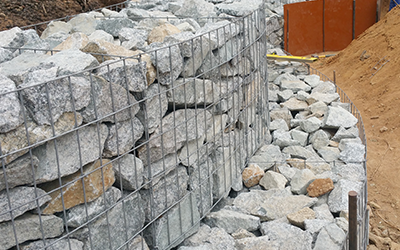
- filtration behind gabion walls
- drainage trenches and French drains
- erosion control under rock layers
- separating fine soils from drainage stone
Geocomposites (Drainage Core + Geotextile Filter)
Geocomposites combine a drainage core with geotextile layers to move water efficiently.
Best for:
- behind retaining walls
- areas requiring high-flow drainage control
- space-limited drainage solutions
Woven Geotextiles (Separation and Reinforcement)
Woven geotextiles are stronger and commonly used for load support and separation, but may also assist with controlled filtration depending on the application.
Best for:
- road base stabilisation
- access roads and platforms
- soil reinforcement applications
Geomembranes (Water Barrier / Waterproofing)
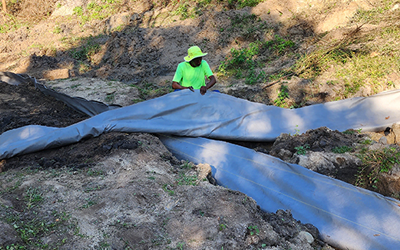
Geomembranes are impermeable liners used where water must be prevented from entering certain areas.
Best for:
- containment systems
- water exclusion behind structures
- seepage control (site dependent)
Common Applications of Drainage and Filtration Geosynthetics
Geosynthetics are used in many civil and eco-engineering projects where water control is essential.
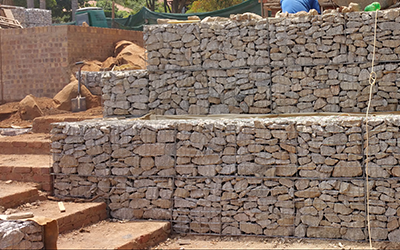
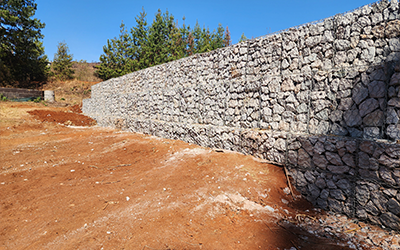
Drainage and Filtration Behind Retaining Walls
Even though some wall systems drain naturally, water buildup behind any retaining structure can create pressure and failure risk.
Geosynthetics help by:
- allowing water to flow out
- preventing soil loss
- protecting drainage stone from clogging
Common use:
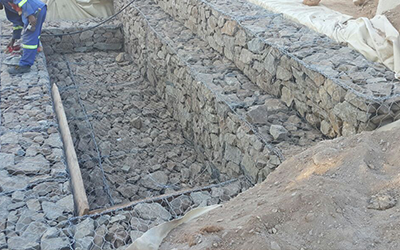
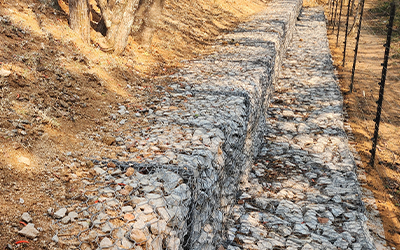
- Behind Gabion Retaining Walls
- Behind Concrete Retaining Walls
- Along Boundary Retaining Structures
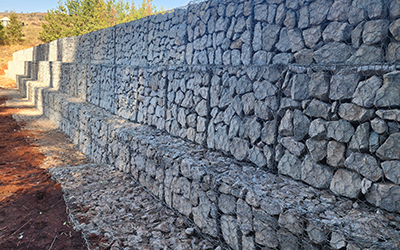
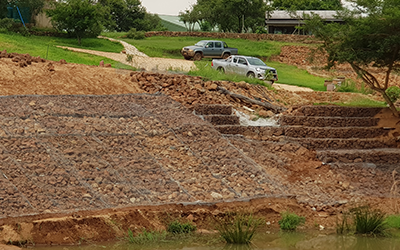
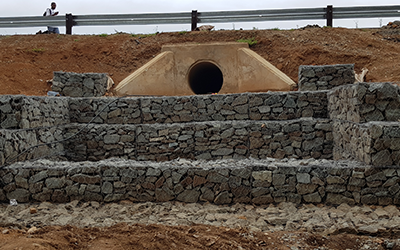
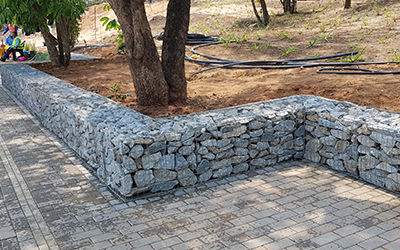
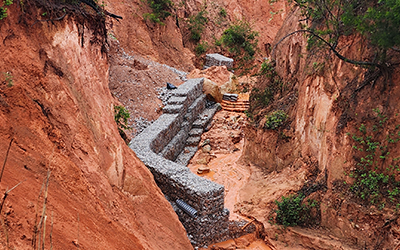
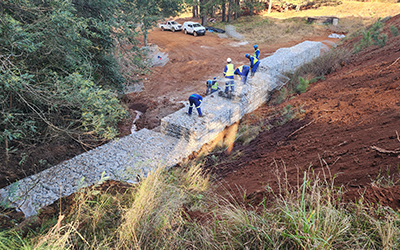
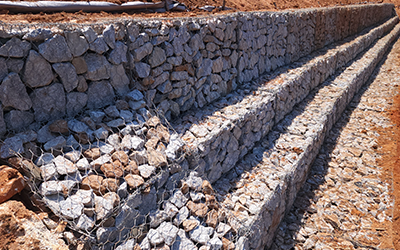
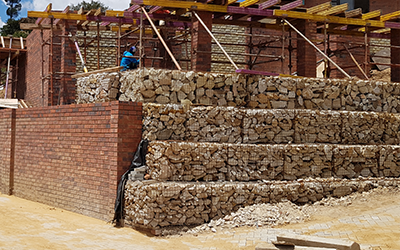
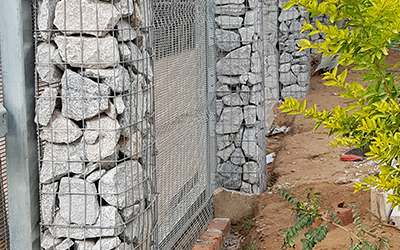
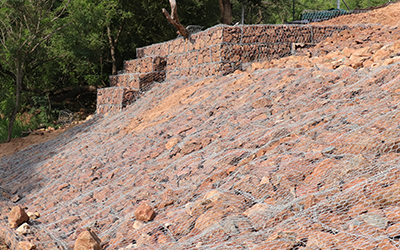
Gabion Structures and Reno Mattresses
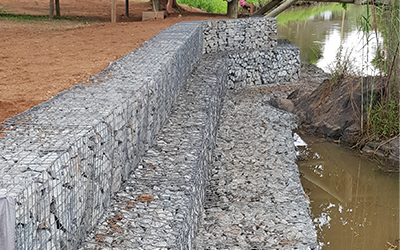
Gabions are naturally draining, but fine soil can wash out through the rock if no filter layer is used.
Geosynthetics help by:
Common Use:
French Drains and Subsoil Drainage Systems
Geotextiles are commonly used to wrap or separate drainage stone to prevent clogging.
Benefits include:
- improved long-term drainage flow
- reduced sediment buildup
- stronger ground stability
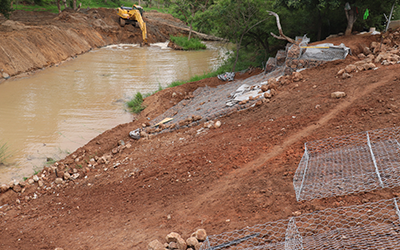
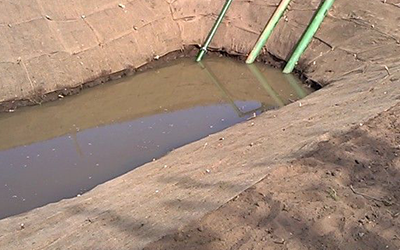
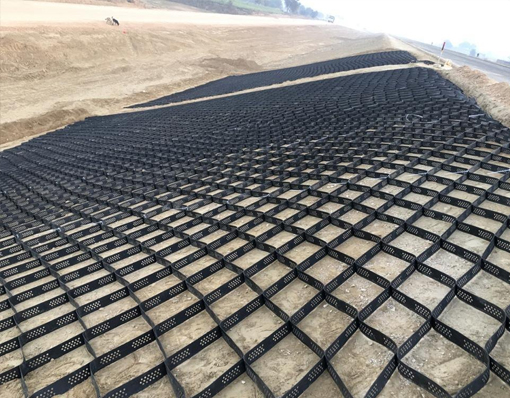
Stormwater Channels and Erosion Control Zones
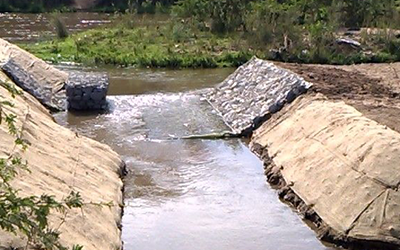
Drainage lines and runoff zones often experience soil washout and scouring during storms.
Geosynthetics are used to:
- Support Erosion Protection Stone Layers
- Maintain Filtration Performance
- Stabilise The Soil Underneath
Common use:
- Stormwater Channels
- Culvert Outlets
- Erosion Gullies And Washaways
Roads, Access Routes and Construction Platforms
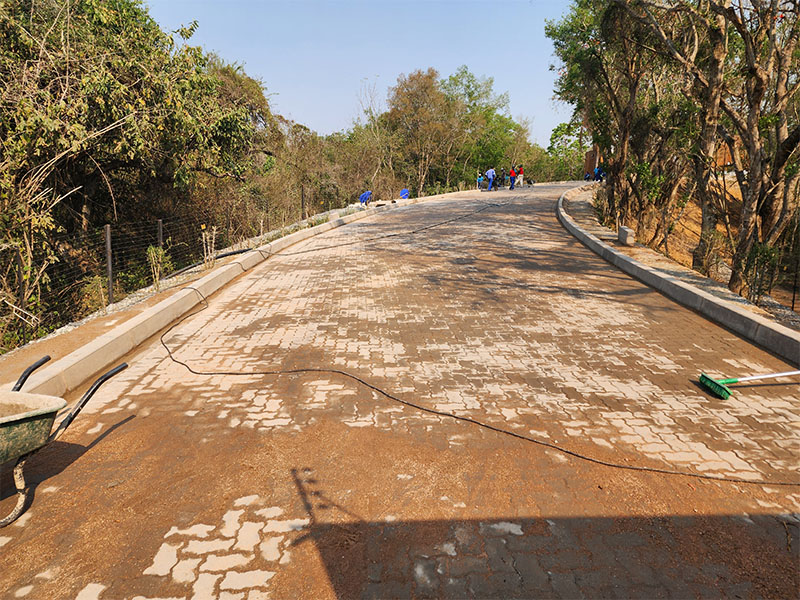
Soft or wet ground is one of the biggest challenges for roads and access areas.
Geosynthetics help by:
- separating soil from base layers
- improving load spread
- reducing rutting and sinking
Common use:
- farm roads
- estate roads
- parking areas
- temporary construction access
Key Benefits of Drainage& Filtration Geosynthetics
Using the right geosynthetics offers long-term performance benefits.
Improved Soil Stability
By preventing water damage and soil loss, geosynthetics keep the ground stable.
Reduced Erosion and Washaways
They protect soil from being removed by runoff and flow.
Better Drainage Performance
Water moves through the correct channels instead of saturating the ground.
Lower Retaining Wall Failure Risk
Reducing water pressure and soil washout improves safety and durability.
Longer Lifespan of Infrastructure
Roads, walls, slopes, and drains last longer when water is managed correctly.
Common Mistakes to Avoid
Even the best geosynthetic can fail if used incorrectly.
Using the Wrong Geotextile Type
Not all geotextiles are designed for the same function. Filtration and drainage require the correct permeability and strength.
Leaving Geosynthetics Exposed
Geosynthetics should be covered soon after installation to avoid UV damage and physical tearing.
Incorrect Installation or Overlaps
Poor overlaps or exposed seams can allow soil migration and reduce performance.
Ignoring Drainage Flow Paths
Geosynthetics help, but they don’t replace proper drainage design. Water must still be directed correctly.
How to Choose the Right Drainage & Filtration Geosynthetics
The correct choice depends on:
A professional site assessment helps ensure the right material is used for the right application.
Why Choose Civil Structural & Eco-Engineering?
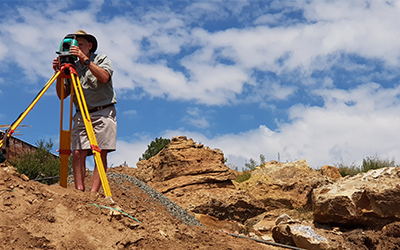
At Civil Structural & Eco-Engineering, we assist with practical and durable solutions for site stability, erosion protection, and drainage performance across South Africa.
We help clients with:
- Drainage And Filtration Geosynthetic Selection
- Soil Stabilisation Support
- Erosion Control Planning
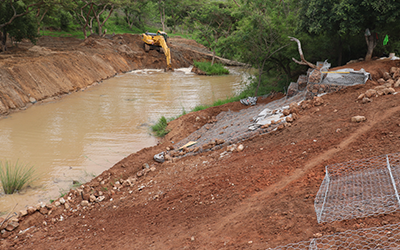
- Gabion Integration For Retaining And Riverbank Works
- Site Consultation And Practical Guidance
Drainage and Filtration Geosynthetics Prevent Failure and Save Money
Most erosion, settlement, and retaining wall failures start with uncontrolled water movement. Drainage and filtration geosynthetics offer an effective way to manage water, protect soil, and improve long-term performance of civil structures.
If you need reliable drainage and filtration solutions for your site, Civil Structural & Eco-Engineering is ready to assist with practical recommendations and durable geosynthetic options.