How Game Reserves and Safari LodgesCan Protect Their Land from Flood Damage
The Lowveld’s summer rains are one of its greatest gifts.
The seasonal downpours fill rivers, dams and waterholes, and return life to the bush. But as January 2026 reminded us all too vividly, those same rains can turn catastrophic.
When heavy rainfall swept through Limpopo and Mpumalanga in January, the devastating flooding washed away roads and bridges, submerged camps and lodges, and the Kruger National Park was forced to evacuate staff and guests.
Tourist numbers dropped by 41% during the peak summer season, and the estimated infrastructure damage reached approximately R550 million.
Officials warned the flooding put the sustainability of the entire parks network at risk.
For private game reserves, safari lodges, and wildlife properties across the Lowveld, what happened with the recent historic flooding, is a poignant reminder of just how important it is to take safety precautions before the waters begin to rise.
Why Wildlife Properties Are Particularly Vulnerable?
The landscape that makes the Lowveld so breathtaking, its river systems, rocky koppies, sandy soils, and open plains, is also what makes it vulnerable.
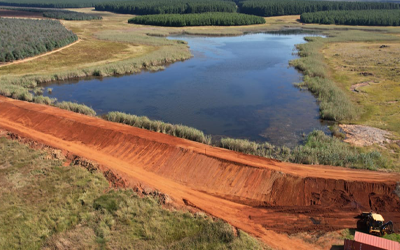
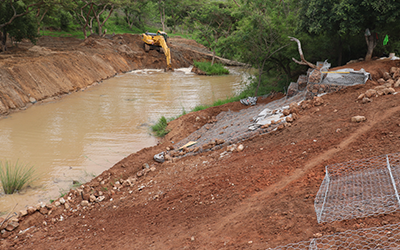
Properties in this region face a unique combination of risks each summer: high-intensity rainfall over short periods, rivers that rise rapidly, embankments that erode, and access roads that can become impassable overnight.
When infrastructure fails on a private game reserve or lodge, the consequences are immediate. Guests cannot reach you. Staff cannot operate safely. Revenue stops. And repair costs can be significant, often far exceeding what proactive protection would have cost.
The good news is that these risks are manageable, with the right engineering solutions in place before the rains arrive.
Three Proven Solutions for Flood and Erosion Protection
At Civil Structural & Eco-Engineering, we’ve helped clients of all kinds put in place highly-efficient systems to control flooding and to prevent the worst from happening. If you are only now looking into how to prevent damage caused by erosion, these are the 3 best solutions to begin with:
Gabion Systems for Riverbank and Embankment Protection
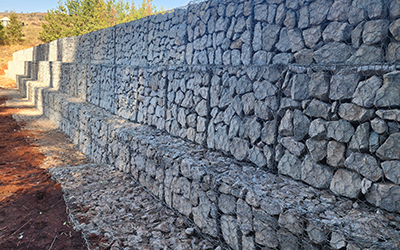
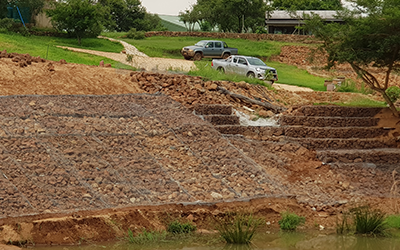
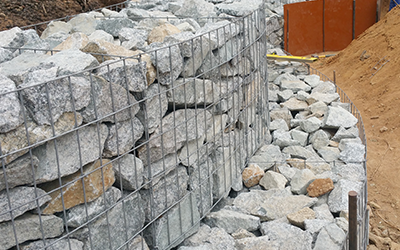
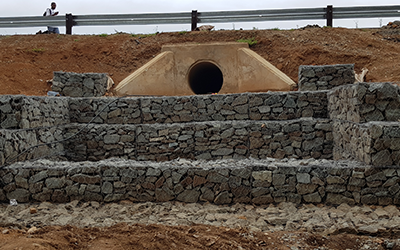
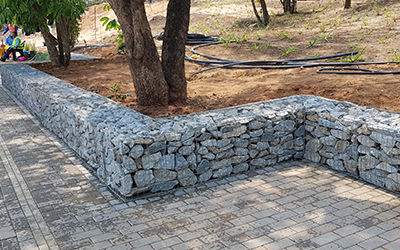
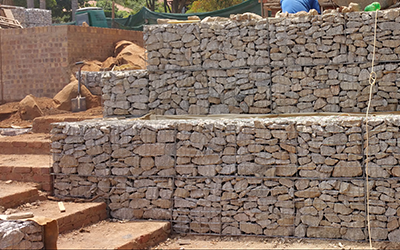
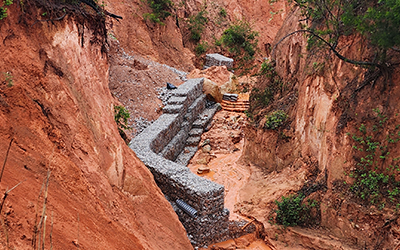
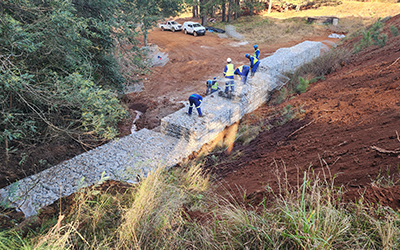
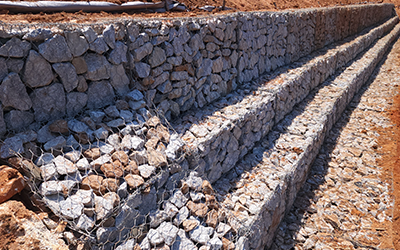
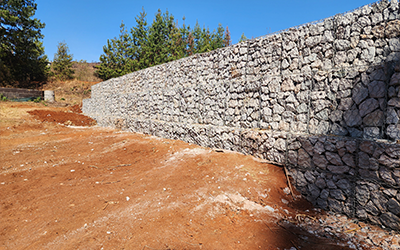
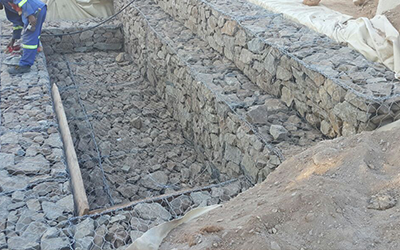
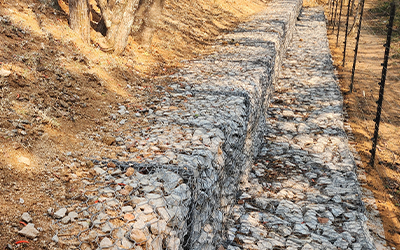
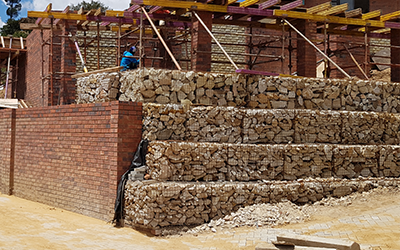
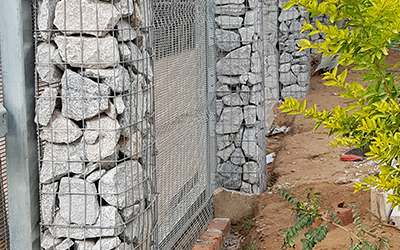
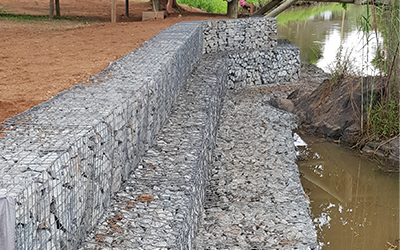
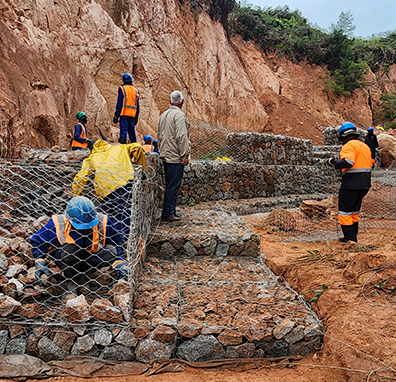
Gabion baskets, which are wire mesh cages filled with rock, are one of the most effective and environmentally sympathetic tools for protecting riverbanks, embankments, and slopes from flood damage.
Unlike concrete, gabions are flexible and porous. They are designed to allow water to pass through rather than forcing it to find another path, which reduces the erosive forces that cause catastrophic failures.
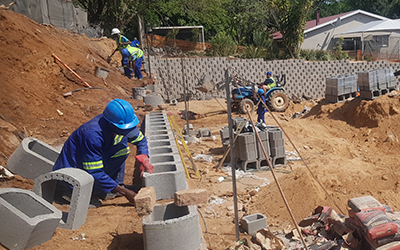
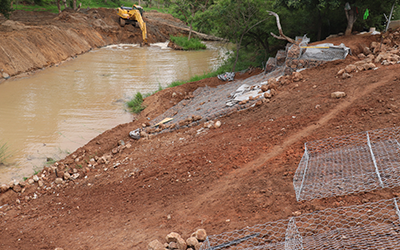
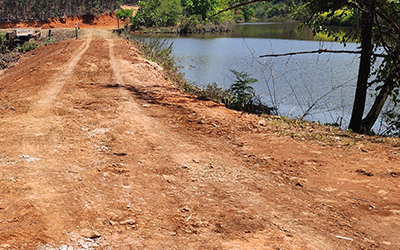
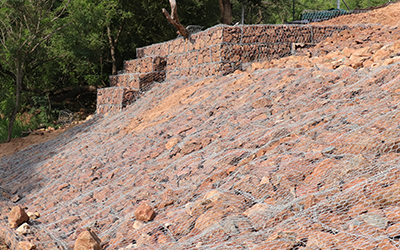
Gabion retaining walls, Reno mattresses, and gabion mattresses can be engineered to suit the specific terrain of your property, whether you’re protecting a riverbank along the Sabie, stabilising an eroded embankment, or reinforcing the edges of a game-viewing road.
They are durable, low-maintenance, and blend naturally into the landscape, making them ideal for lodges wanting to keep with an aesthetic theme.
Geotextiles for Soil Stabilisation and Erosion Control
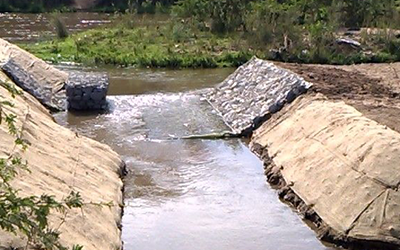
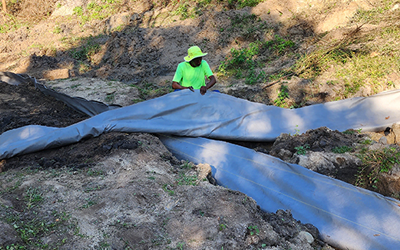
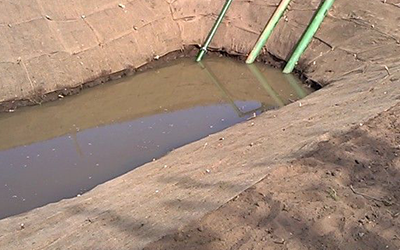
Geotextiles are permeable fabrics used beneath gabions, on slopes, and across vulnerable soil surfaces to prevent erosion and promote drainage.
They work by holding soil particles in place while allowing water to move through, which greatly reduces the scouring effect of fast-moving surface water.
On wildlife properties, geotextiles are particularly valuable for stabilising road verges, protecting drainage channels, and reinforcing areas where vegetation has been disturbed.
Used with gabions, they form a tough defence against the sustained heavy rainfall that the Lowveld experiences each summer.
Drainage Planning and Infrastructure
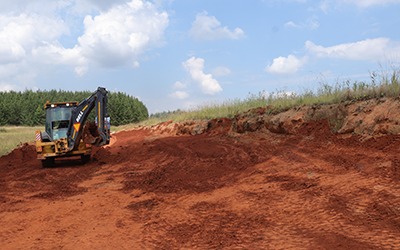
Many flood damage events on private properties are not caused by rivers overflowing their banks — they are caused by poor drainage. When water has nowhere to go, it finds its own path, and that path is often through roads, across driveways, and under foundations.
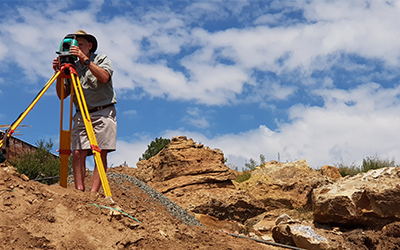
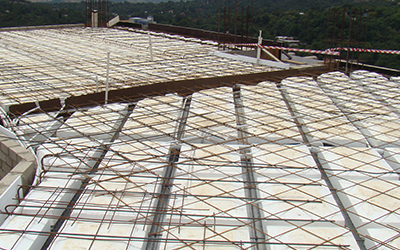
A professional drainage assessment can identify the vulnerable points on your property and recommend targeted solutions: culverts, channels, catch drains, and properly graded roads that direct water away from infrastructure. This kind of proactive planning is among the most cost-effective investments a property owner can make.
Don't Wait for the Next Flood
The January 2026 floods were severe and they will not be the last.
Climate patterns in Limpopo and Mpumalanga suggest that high-intensity rainfall events are becoming more frequent and more unpredictable.
So, the question is not whether serious flooding will occur again, but whether your property will be ready when it does.
At Civil Structural & Eco-Engineering, we have been working with game reserves, safari lodges, and private landowners across the Lowveld since 1999. We understand the terrain, the seasonal pressures, and the balance between functional engineering and preserving the natural beauty of your property.
Contact us today for a site assessment and let’s build something that lasts, through whatever the Lowveld sky has to throw our way.
Frequently Asked Questions
How do gabion walls hold up during heavy flooding?
Gabion baskets are designed to perform under pressure. Because they are porous, floodwater flows through the structure rather than building up against it. This dramatically reduces hydrostatic pressure, which is the main cause of retaining wall failures during floods. The weight of the rock fill also anchors the structure firmly in place, even in fast-moving water.
Are gabion solutions suitable for game reserves and safari lodges specifically?
Absolutely. Gabions are one of the most popular choices for wildlife properties precisely because they are visually unobtrusive and blend into natural landscapes. They require no painting, no sealing, and minimal maintenance. Over time, vegetation often grows through the structure, integrating it further into the surrounding environment.
How do I know if my property needs erosion control intervention?
Key warning signs include visible soil loss or gullying on slopes, undercutting of riverbanks, road surfaces that wash out after heavy rain, and sediment buildup in drainage channels. If you’ve noticed any of these on your property, especially after the January 2026 floods, a professional site assessment is strongly recommended before the next rainy season.
What is the difference between geotextiles and gabions, and do I need both?
Gabions are structural elements used to physically hold back soil, water, and embankments. Geotextiles are filtration and stabilisation fabrics installed beneath or behind gabions to prevent soil particles from washing through the structure. In most applications, the two work together: gabions provide the structural strength, and geotextiles ensure the long-term integrity of the installation.
How quickly can erosion control solutions be installed before the rainy season?
This depends on the scale and complexity of the project, but many gabion and geotextile installations can be completed within a few days to a few weeks. The key is getting a site assessment done early, ideally in winter or early spring, so that design, material procurement, and installation can be completed well before the summer rains arrive.