Geosynthetic Clay Liners vs Traditional Pond Linersfor Eco Properties
Building an eco property in South Africa means making choices that respect the land while at the same time creating something utterly beautiful.
You want your pond to last, and you also want to protect local wildlife and find a solution that suits your environmental values.
The liner you choose makes all the difference.
Many eco property builders assume traditional pond liners are the only option. They see plastic sheets or concrete and think that’s the end of the story.
This assumption can create problems later. You can invest thousands in your pond, only to face repairs within 3 to 5 years.
Traditional liners tend to crack under South Africa’s intense UV radiation, and then they leak during a drought. Another problem with traditional liners is that wildlife can get trapped in the sharp edges.
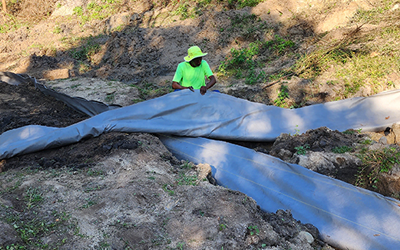
Geosynthetic clay liners can give you a completely different option.
These liners combine synthetic materials with natural clay, creating something that works with the environment instead of against it.

What Makes a Pond Liner the Best Option for Eco Properties?
The best pond liners meet 5 specific criteria for eco properties:
- Durability – They survive 20+ years without cracking
- Environmental safety – No harmful chemicals leach into water
- Wildlife compatibility – Smooth surfaces prevent animal injury
- Water retention – Less than 1% leakage per year
- Regulatory compliance – Meet South African NEMA standards
Geosynthetic Clay Liners vs Traditional Pond Liners
| Feature | Geosynthetic Clay Liners | Traditional Pond Liners (HDPE/EPDM) |
| Lifespan | 25–30 years | 5–10 years |
| UV resistance | Excellent (clay protects synthetic layer) | Poor (degrades in 3–5 years) |
| Drought tolerance | Maintains flexibility during dry periods | Becomes brittle, cracks easily |
| Wildlife safety | Natural clay surface, no sharp edges | Plastic edges trap birds and mammals |
| Freshwater ponds | Perfect – zero chemical leaching | Risk of plastic compounds entering water |
| Wastewater ponds | Excellent – clay absorbs contaminants | Moderate – may leak harmful substances |
| Decorative water features | Beautiful natural appearance | Artificial plastic look |
| NEMA compliance | Fully compliant | May require additional certifications |
| Installation complexity | Moderate – requires professional grading | Simple – DIY possible but prone to errors |
| Maintenance | Minimal – inspect annually | High – repair cracks every 2–3 years |
Why Geosynthetic Clay Liners are Becoming Popular on South African Eco Properties
South Africa’s climate demands specific qualities when it comes to liners.
If your region experiences intense sunlight (UV index 11+), prolonged droughts, and temperature swings from 5°C to 40°C, going with geosynthetic clay liners is the ideal option because it handles all three conditions perfectly.
The clay layer shields the synthetic backing from UV damage.
This means your liner survives 25 years in harsh sun without cracking. During drought, the clay maintains moisture balance, keeping the liner flexible when traditional options become brittle.
These pond liners also do no harm to animals. The geosynthetic clay natural surface prevents the trapping incidents common with plastic liners.
For wastewater and drainage ponds on agricultural eco farms, the clay layer absorbs contaminants before they reach groundwater. This protects your bio-dynamic farming certification and meets NEMA requirements without expensive additional treatments.

Making the Right Choice
We specialise in environmental solutions that work with South Africa’s unique conditions.
Our approach focuses on long-term sustainability rather than short-term savings. When you partner with experts who understand both environmental regulations and practical installation, your pond becomes an asset rather than a liability.
The best pond liners for eco properties aren’t about finding the cheapest option. They’re about choosing materials that respect the environment, protect wildlife, and last through South Africa’s challenging climate.
Build a pond that lasts.
Frequently Asked Questions
What are the best pond liners for eco properties in South Africa?
Geosynthetic clay liners are the best pond liners for eco properties in South Africa because they last 25–30 years, comply with NEMA regulations, protect wildlife, and handle intense UV radiation and drought conditions better than traditional HDPE or EPDM liners.
How long do geosynthetic clay liners last compared to traditional pond liners?
Geosynthetic clay liners last 25–30 years while traditional pond liners (HDPE/EPDM) last only 5–10 years in South African conditions, making geosynthetic clay 3 times more durable under intense UV exposure and drought stress.
Are geosynthetic clay liners safe for freshwater, wastewater, and decorative ponds?
Yes, geosynthetic clay liners work safely for all three pond types: freshwater ponds (zero chemical leaching), wastewater ponds (clay absorbs contaminants), and decorative water features (natural appearance without artificial plastic look).
Do geosynthetic clay liners meet South African environmental regulations?
Geosynthetic clay liners fully comply with South African NEMA (National Environmental Management Act) standards for eco properties, wildlife sanctuaries, eco-tourism lodges, and sustainable agricultural farms without requiring additional certifications.
Why are geosynthetic clay liners better for wildlife than traditional pond liners?
Geosynthetic clay liners have natural clay surfaces with no sharp edges, preventing birds and mammals from getting trapped, while traditional plastic liners create sharp edges that injure wildlife and cause trapping incidents common in South African conservation areas.